ABOUT ME
I WORK WITH DESIGN TO SOLVE PROBLEMS.
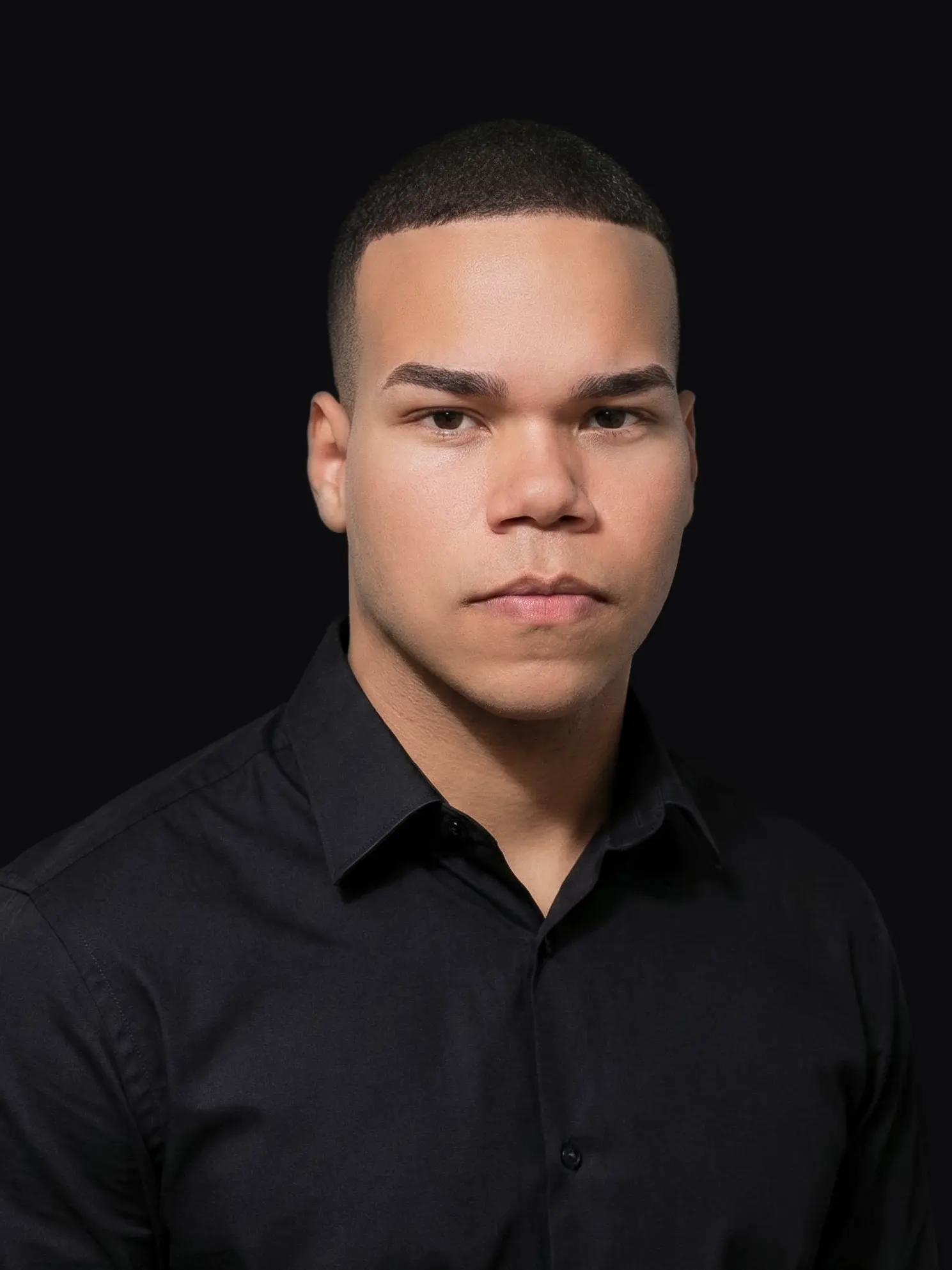
Based in Roteiro/AL, Brazil, I solve problems that exist outside of Figma—in the real world, where the budget is zero, the deadline is today, and the solution needed to work yesterday.
My journey began when I took on an administrative role at a Municipal Health Department and found utter chaos: no system, no processes, and no team. Just the urgent demand of hundreds of citizens relying on medical exams for diagnosis and treatment.
That’s where I learned that design isn’t about inspiration, but about eliminating friction and delivering measurable impact. I mapped 18 critical problems, ranging from privacy violations (6,000 sensitive documents stored on personal phones) to hours wasted manually assembling PDFs. With zero budget, I built an MVP using free tools to stabilize the operation, and then specified the definitive system that would reduce manual work from 3 hours to 3 minutes.
Today, I use this experience to transform complexity into clarity, unstructured data into scalable systems, and confusing processes into workflows that actually work.
I eliminate the obstacles between what the user needs to do and what the business needs to achieve. I transform confusing processes into clear workflows, always within real-world constraints.
My approach is divided into Four Pillars:
1. Start with constraints, not the ideal: I don’t start in Figma. I start with the constraints: zero budget, impossible deadlines, limited technology. From there, I build the most viable solution—the one that works in the real world. In the Health Department's case, this meant first building an MVP with Google Sheets (free tools the team already knew) to stabilize the operation. Only then did I specify the definitive system, already validated and ready for development.
2. Solve the right problem: I spend weeks inside the operation. By assisting patients and assembling batches myself, I discovered that the real bottleneck wasn't just visual, but rather the hours spent on manual rework and the legal risk of the data. Design must tackle the root cause.
3. Deliver specifications, not just screens: My work goes beyond the interface. I structure the logic behind it: organizing information, defining hierarchies, and documenting decisions. When I delivered Regula.Já, it wasn't just a prototype—it was a complete technical specification, with user stories, business rules, and accessibility guidelines. Everything to ensure that developers and stakeholders understood every decision.
4. Measure real impact: UX is about how things work; UI is about making that visible. I measure success by impact. In Regula.Já, this meant:
- Reducing batch assembly time from 3 hours to 3 minutes.
- Eliminating 40 weekly hours of manual work.
- Protecting 6,000 sensitive documents.
If a project doesn't improve real metrics or simplify processes, it has failed. Design must pay for itself.
EXPERIENCE
Product Designer & UX/UI Designer
2020 - PresentA period of building my profile through intensive practice—learning guided by the urgency of solving real problems with limited resources.
In Regula.Já, I transformed a chaotic workflow (loose spreadsheets, personal cell phones, 40 weekly hours of rework) into a structured system. With no budget and no defined processes, I had to master multiple disciplines to make the solution viable:
- Service Design: Mapping the complete journey to eliminate operational bottlenecks.
- UX Research: Ethnographic immersion, operating the system to understand the real pain points.
- Information Architecture: Structuring taxonomy to create an organized database.
- Compliance: Defining access policies and data protection (LGPD/GDPR).
- UI Design: Adapting the Gov.BR Design System for high-fidelity interfaces.
- Technical Specification: Documenting business rules and validation algorithms.
Result: A projected reduction of 40 weekly hours of manual work, the protection of 6,000 sensitive documents, and a complete technical specification ready for handoff.
Administrative Assistant (Regulation)
2025 - PresentResponsible for flow management and protocol in the medical regulation sector. I work directly on the front line with users, diagnosing bottlenecks in the service journey to ensure correct triage and scheduling feasibility. Within a newly restructured network, my role is to eliminate operational friction and ensure process efficiency.